
Small and midsize businesses regularly lose thousands of dollars each quarter to silent contract rollovers. When vendor agreements, software subscriptions, commercial leases, and client service master service agreements (MSAs) sit buried in scattered PDF files across shared drives and email threads, notice windows expire unnoticed. The consequence is automatic 12-month lock-ins, unbudgeted price escalations, and unmanaged vendor liabilities.
Applying artificial intelligence to contract renewal tracking can eliminate the tedious manual review of hundreds of agreement pages, but unconstrained language models introduce serious risks if left unsupervised. A probabilistic model can hallucinate a termination notice period, confuse business days with calendar days, miss an obscure addendum, or fail to parse governing law stipulations accurately.
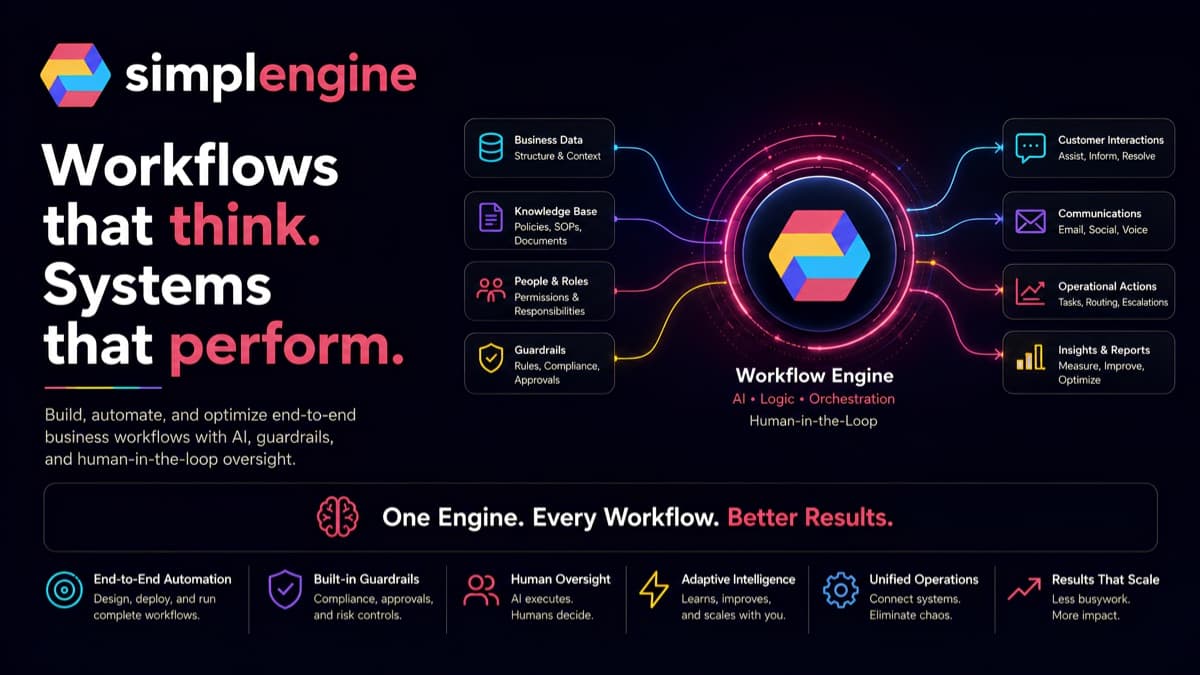
A reliable contract renewal tracking system requires a hybrid architecture. AI models handle unstructured document parsing and semantic clause extraction, while deterministic code calculates calendar deadlines, enforces notification schedules, manages idempotency, and halts high-risk actions at designated human checkpoints. By setting clear workflow boundaries, your organization can protect its cash flow and maintain rigorous vendor governance.
/ 01
The true operational risk of passive contract rollovers
Most contract management failures do not stem from a total lack of awareness, but from a failure to track notice triggers rather than nominal expiration dates. A vendor contract ending on December 31 that mandates a 60-day written notice prior to renewal actually expires as an active decision on November 1. Once that earlier milestone passes without action, the contract has effectively renewed under evergreen clauses, often with automatic 5% to 15% price indexation adjustments.
Manual tracking in spreadsheets fails because files drift out of date as amendments, rate cards, and statements of work are executed. Furthermore, assigning staff to read dozens of legacy agreements creates substantial operational friction. When companies attempt to solve this by dumping raw PDF files into generative AI prompts without governance, they encounter inconsistent schema outputs, missed non-standard provisions, and data privacy leaks.
Building a sustainable tracking system requires shifting from passive repository storage to active, event-driven contract lifecycle monitoring. As noted by [deveshjaiswal.com](https://deveshjaiswal.com/ai-automation-small-business-workflows/), successful business automation starts with an event rather than an open-ended prompt, defining exact triggers, read permissions, output schemas, and an accountable human owner for every process.
- Evergreen auto-renewal clauses that lock organizations into multi-year commitments prematurely.
- Notice periods calculated from varying baselines, such as calendar days, business days, or quarter-end dates.
- Scattered amendments, addenda, and side letters that override primary contract terms.
- Uncontrolled price escalations triggered automatically upon the anniversary date.
/ 02
Defining the architecture: separating extraction from scheduling
A critical mistake in AI implementation is allowing a large language model to drive the entire business workflow, including scheduling alerts and modifying records. Modern enterprise automation architectures separate concerns across discrete layers: document ingestion, AI semantic interpretation, deterministic business logic, and audited action execution, as highlighted by [usamamoin.com](https://usamamoin.com/blog/enterprise-ai-integration-guide).
In a contract renewal pipeline, the language model serves solely as a specialized extraction engine. It takes preprocessed text from executed agreements and returns strictly structured, typed JSON containing key fields such as parties, execution date, term length, initial termination date, renewal type, required notice window, and escalation caps. The model does not calculate calendar dates, update databases directly, or send external termination letters.
- Ingestion layer: Captures executed contracts, extracts metadata, and stores immutable raw source files.
- AI extraction layer: Converts unstructured legal prose into schema-validated JSON data structures.
- Deterministic rules engine: Applies calendar arithmetic, accounts for leap years and holidays, and sets alert milestones.
- Action and presentation layer: Posts structured tasks to procurement boards and notifies process owners.
/ 03
Document ingestion, OCR, and establishing the source of truth
Reliable extraction starts with pristine document processing. Contracts arrive in multiple formats, including digital PDFs, scanned image PDFs with skew and low contrast, and DocuSign or Adobe Sign completion packets. Feeding degraded images directly to multi-modal language models can result in hallucinated clause numbers or misread dates.
A robust pipeline first runs optical character recognition (OCR) and layout analysis to segment headers, signature blocks, definitions, and exhibits. The system hashes the original file (e.g., using SHA-256) to establish an immutable document record in secure object storage. Every extracted data point retains a direct pointer back to the exact page number, section heading, and bounding box coordinates within the source file.
Treating internal databases and source repositories as controlled systems of record is essential. The AI system provides extracted suggestions, but it must never overwrite master vendor records or ERP finance tables without verified reconciliation against the signed primary document.
- Compute cryptographic hashes for all uploaded contracts to detect duplicate uploads or mid-stream tampering.
- Preserve exact source text citations and page indices alongside every extracted JSON value.
- Segment multi-document packets to separate master agreements from non-binding exhibits or order forms.
/ 04
Structured extraction: isolating renewal, notice, and pricing clauses
To ensure reliability, prompt engineering must be backed by rigid JSON schema validation. Modern workflow integrations rely on deterministic data schemas to guarantee typed, parseable data structures from model outputs, as outlined in [ilirivezaj.com](https://ilirivezaj.com/ai/ai-workflow-integration). If the model returns an unexpected key or invalid date format, the pipeline immediately rejects the payload and routes the document to an exception queue.
The model must be instructed to extract both explicit values and contextual parameters. For example, if a clause states 'This Agreement shall renew automatically for successive one-year terms unless either party gives written notice at least ninety (90) days prior to the expiration of the Initial Term,' the extraction must isolate the baseline period, the notice duration, and the required delivery mechanism (such as certified mail or email to a designated officer).
- Contract metadata: Counterparty legal entity name, effective date, expiration date, and governing law.
- Renewal mechanics: Auto-renewal status, renewal term length, and maximum permitted renewal cycles.
- Notice requirements: Notice window duration, calculation unit (business vs. calendar days), and recipient notice address.
- Financial impact: Price indexation rules, fee escalation percentages, and early termination penalties.
/ 05
Deterministic calendar logic: calculating true notice deadlines
Large language models frequently make arithmetic errors when calculating future dates across calendar boundaries, leap years, and regional public holidays. For this reason, date mathematics must always be delegated to deterministic software code, not generative AI.
Once the AI extraction layer outputs the raw fields—such as an expiration date of `2027-03-31` and a notice requirement of `60 days` prior—the deterministic workflow engine executes standard date libraries to calculate the effective notice deadline (`2027-01-30`). The engine then generates a staged sequence of operational alerts for the contract owner, providing ample runway for market benchmarking, vendor renegotiation, or formal termination.
- 120 days prior to notice deadline: First strategic review notification to assess vendor performance and market alternatives.
- 90 days prior to notice deadline: Financial audit notification to review pricing changes and budget alignment.
- 60 days prior to notice deadline: Executive decision checkpoint to approve renewal, renegotiation, or termination.
- 30 days prior to notice deadline: Urgent escalation flag if no formal action has been logged in the system.
/ 06
Human-in-the-loop verification and the autonomy ceiling
Automating contract renewal tracking does not mean permitting an autonomous agent to cancel contracts or sign renewal addenda independently. High-impact commercial actions require an explicit autonomy ceiling, as explained by [jainmehul.com](https://www.jainmehul.com/guides/agentic-workflow-automation), where the workflow pauses at defined checkpoints to present structured evidence for human sign-off.
During initial contract onboarding, the workflow enters an assisted verification mode. A procurement or legal team member reviews the AI-extracted fields alongside a side-by-side view of the source PDF. The reviewer confirms the extracted dates, confirms the assigned internal department owner, and approves the generated alert schedule with a single click before the record becomes active.
- Confidence threshold gating: Flag low-confidence extractions or conflicting clauses for manual legal review.
- Side-by-side interface: Present extracted values directly juxtaposed against highlighted PDF source snippets.
- Strict prohibition of auto-execution: Never allow the AI agent to send cancellation notices or sign agreements without explicit approval.
- Rejection and correction logging: Capture human overrides to monitor extraction accuracy and improve system prompts.
/ 07
State persistence, durability, and idempotent synchronization
Production automation systems must withstand server restarts, API rate limits, and network interruptions without losing state or creating duplicate tasks. A durable workflow orchestrator persists state at every step boundary in a reliable transactional database, keyed by a persistent run identifier.
Idempotency is non-negotiable when synchronizing contract data across internal systems like ERPs, CRMs, and project management tools. As demonstrated in financial workflow implementations by [farkeytech.com](https://farkeytech.com/ai-workflow-automation-example-scaling-teams/), combining unique identifiers—such as counterparty name, contract hash, and execution date—prevents the system from posting duplicate calendar events, creating redundant review tickets, or generating duplicate reminder emails upon workflow retries.
- Stateful orchestration: Resume workflows from the last successful execution step following API timeouts.
- Idempotency keys: Generate deterministic keys based on contract SHA-256 hash and version ID to prevent duplicate actions.
- Safe retry logic: Implement exponential backoff for OCR and model API calls while avoiding redundant database writes.
/ 08
Security, privacy boundaries, and tenant isolation
Commercial contracts contain proprietary pricing, non-disclosure commitments, employee salaries, and sensitive intellectual property. Uploading these documents to public, consumer-facing AI models without enterprise privacy guarantees introduces severe compliance liabilities.
The automated contract pipeline must utilize enterprise API endpoints that guarantee zero data retention for model training. Access to contract data should follow least-privilege role-based access control (RBAC), ensuring that team members only access agreements relevant to their specific department or operational domain.
- Zero-training data terms: Ensure all AI model providers maintain contractual commitments not to use submitted agreements for model training.
- Client-side encryption: Encrypt contract files at rest using AES-256 and in transit using TLS 1.3.
- Role-based scoping: Restrict visibility of executive compensation, M&A agreements, and vendor pricing to authorized roles.
- Comprehensive audit logging: Maintain tamper-evident logs of every contract view, extraction, approval, and export.
/ 09
Exception handling: ambiguous clauses and non-standard terms
Contracts frequently contain ambiguous, non-standard, or conflicting language that defies clean categorization. An agreement might state that it renews unless terminated, but leave the notice window contingent on a secondary schedule or an unattached service order. Alternatively, multiple amendments may contain conflicting termination provisions.
A resilient automation workflow does not guess when confronted with ambiguity. If the AI model detects conflicting renewal terms or confidence scores fall below acceptable thresholds, the system flags the contract as an unresolved exception. The workflow routes the item to an exception queue with an explanation of the ambiguity, assigning it directly to legal counsel or the senior contract manager.
- Ambiguity tagging: Automatically identify missing schedules, unattached exhibits, or conflicting dates across amendments.
- Deterministic fallback: Default to the most conservative notice window when ambiguous language is detected until human review occurs.
- Exception SLAs: Enforce strict resolution timeframes for flagged contracts to prevent unprocessed agreements from lingering.
/ 10
Practical implementation roadmap and operational checklist
Deploying an automated contract renewal tracking system should follow a phased rollout to validate accuracy before expanding across the entire organization. Attempting to ingest thousands of legacy contracts on day one invariably overwhelms staff with validation backlogs.
Begin by auditing and categorizing your active contracts by financial exposure and renewal urgency. Pilot the system on standard software-as-a-service (SaaS) and vendor service agreements before expanding to complex master service agreements, commercial leases, or customer contracts. Track false extraction rates, review times, and notification adherence over a fixed 60-day pilot window.
- Phase 1: Ingest top 20 high-value recurring vendor agreements in shadow mode to benchmark extraction precision.
- Phase 2: Establish the deterministic calendar notification engine and connect alert queues to communication channels.
- Phase 3: Deploy the human verification interface and train department owners on renewal approval workflows.
- Phase 4: Run quarterly audits to reconcile active contracts against accounting software payment disbursements.
/ Practical takeaway
Automating contract renewal tracking with AI prevents costly auto-renewals and eliminates manual tracking overhead. Success depends on using AI solely for structured clause extraction while relying on deterministic code for date calculations and human checkpoints for final business decisions.
Primary references
These sources support the factual and technical guidance in this article. Product decisions still require review against your own systems, policies, and risk.
AI Automation for Small Business: 15 Practical Workflows Enterprise AI Integration Guide for Teams That Ship Agentic Workflow Automation: Practical Implementation Guide AI Workflow Automation Architecture for Scaling Teams