/ Jason’s working method
I build AI automation to survive real use.
I do not start with an agent, a prompt, or a software brand. I start with the work: who owns it, what can go wrong, what evidence proves success, and where a person must remain in control.
/ The point of view
A fast demo is not the same thing as a working system.
I have watched promising automations fail because nobody defined the system of record, a retry created duplicates, a model was allowed to invent tool inputs, or a business granted more access than the job required. The hard part is not making AI produce an answer. The hard part is making the entire workflow safe, observable, recoverable, and useful to the people who operate it.
That is why I build in short loops: map, build, test, observe, and improve. The client owns its accounts and data. Important actions stay visible. Claims are tied to provider evidence. Exceptions return control to a named person.
/ Five required artifacts
What I want to see before I call an automation ready.
A workflow map
The trigger, systems, handoffs, decisions, exceptions, evidence, and current owner—written before a model or tool is selected.
An authority map
What the system may read, draft, create, send, change, or never do; whose identity it uses; and which actions require confirmation.
A safe first path
One narrow end-to-end iteration using representative data, test accounts, bounded tools, and reversible actions.
An evaluation packet
Normal cases, messy cases, forbidden actions, expected refusals, success evidence, and a named person who decides whether each result passes.
A release and ownership record
Approved access, monitoring, rollback, documentation, provider ownership, credential rotation, and a clear operator after launch.
/ Inside the build
The interface is only the visible layer.
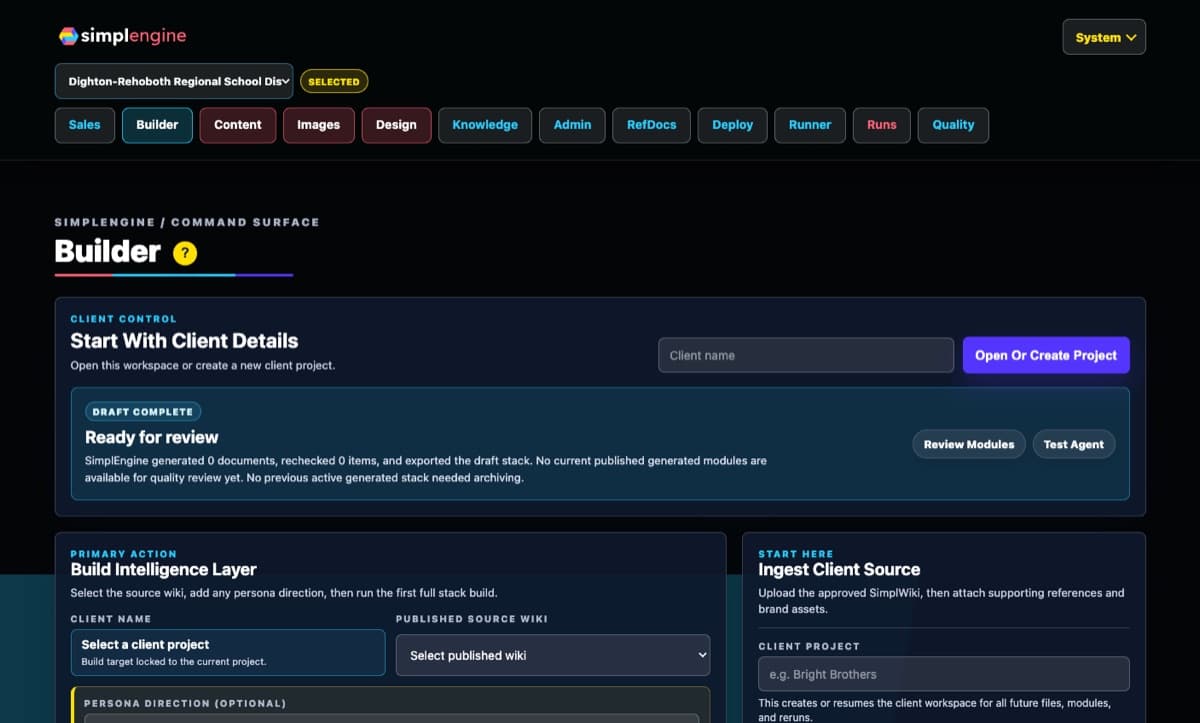
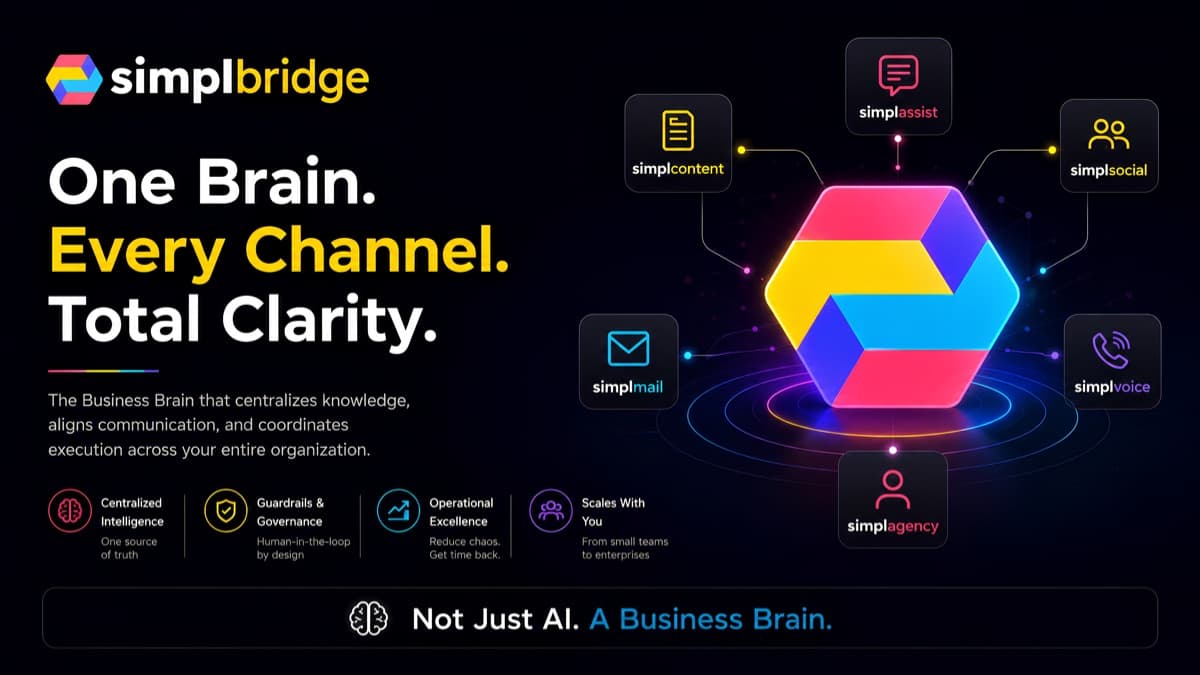
The screenshots are from working systems in the SimplSolutions portfolio. The important work sits underneath them: source ownership, permissions, typed data, tool limits, review states, error handling, and release evidence.
/ Where the line sits
Agents produce. People remain accountable.
On selected portfolio projects, agents have performed roughly 95% of production execution across research, structure, content, code, and QA. The share varies by project. It does not mean 95% of judgment is automated.
- Agents are good at parallel research, structured drafts, repetitive implementation, consistency checks, and test execution.
- People must own goals, permissions, policy, consequential claims, taste, risk acceptance, and final release.
- Providers must prove that a message was sent, a meeting was booked, a payment succeeded, or a record actually changed.
/ Release gate
I would rather delay a launch than hide an unknown.
/ Standards I use
Experience is stronger when the references are visible.
/ Start with the work